
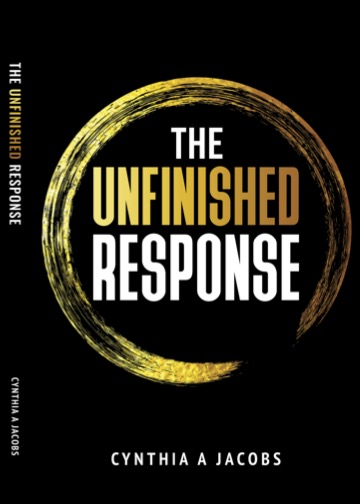
 Forthcoming
BOOK RELEASE
THE UNFINISHED RESPONSE
Understanding the logic of the nervous system, why trauma persists, and what makes resolution possible.
What if trauma isn’t what happened — but what your nervous system is still trying to do?
The human nervous system has spent millions of years evolving the capacity to protect us. It detects danger, anticipates what might happen next, and organises responses intended to keep us alive.
Much of this happens before we have consciously recognised a threat or decided what to do about it.
We turn away. We resist. We fight. We escape. And when those options are no longer available, we may freeze or go into shock.
These are not random reactions. They are part of an extraordinary biological system organised around survival.
But what happens when a protective response is interrupted, overwhelmed, or cannot be completed?
The danger may have passed. The person may have survived. Yet something remains unfinished.
Years later, the nervous system may still continue to anticipate danger, restrict actions that are now possible, or respond to ordinary situations as though the original threat could happen again.
Anxiety. Hypervigilance. Avoidance. Shutdown. Persistent tension. Feeling trapped, restricted or unable to move forward.
We recognise these experiences as symptoms. We learn techniques to manage them, investigate their origins, and try to change how we think and feel.
But what if we have been overlooking something fundamental about the biological responses underlying them?
Understanding the Logic of the Nervous System
The Unfinished Response explores trauma from the perspective of Nervous System Logic (NSL): how the nervous system detects threats, selects defensive strategies, responds when those strategies fail, and uses previous experience to predict what will happen next.
It examines why a response initiated to protect us may remain unfinished, how predictions formed through previous experience influence our reactions and behaviour, and why the nervous system can continue organising around danger long after the original threat has passed.
It also explores something less often considered: what prevents a defensive response from being expressed in the first place?
Sometimes the nervous system learns that fighting back will make matters worse, that escape is impossible, or that protecting ourselves carries consequences we cannot afford.
What appears to be a belief, a personality trait or an inexplicable limitation may have its origins in a biological strategy that once made sense.
And while we may consciously recognise that circumstances have changed, that understanding does not necessarily update the nervous system’s predictions.
This raises an important question: What biological evidence does the nervous system need in order to recognise that something is different now?
Rather than treating every reaction as a separate problem, Nervous System Logic invites us to investigate what the nervous system is responding to, what it predicts will happen, and what remains unresolved.
From Understanding to Resolution
Understanding how the nervous system operates is one thing. Knowing how to work with that organisation to bring about change is another.
This is where the Biological Completion Model™ (BCM) enters the picture.
Developed by Cindy Jacobs through more than two decades of clinical work, BCM works directly with the logic of the nervous system to support the completion of interrupted defensive responses.
BCM begins with a fundamental distinction: surviving an experience does not necessarily mean the nervous system has registered that its protective response succeeded.
Rather than focusing primarily on managing symptoms, BCM investigates the defensive response that was initiated, what prevented its completion, and what is required for the nervous system to recognise a different outcome.
The central proposition is that completing the unfinished response provides the biological evidence necessary for the nervous system to update its predictions. The original threat can then be recognised as belonging to the past, rather than continuing to influence how the nervous system responds in the present.
The objective is not simply to help someone feel better while an unresolved response remains active. It is to work towards changing the underlying biological organisation that continues to produce the response.
The Nervous System at Work: Real Experiences, Real Change
Throughout The Unfinished Response, diverse case studies bring these ideas to life.
They illustrate how the nervous system responds to different kinds of threats, how defensive actions become interrupted, and how those unfinished responses can continue influencing a person’s life long after the original event.
They also reveal what can happen when we work with the nervous system’s own logic.
A response that was previously unavailable becomes accessible. A protective action that could not be completed is finally carried through. A prediction of helplessness, danger or inability to protect oneself begins to change.
Some of these changes are immediate and unmistakable. Others become apparent through what the person can subsequently do, tolerate, express or choose.
The case studies show how the principles of Nervous System Logic can be recognised in real situations, how BCM works with those responses, and the outcomes observed and reported when biological completion occurs.
Across different experiences and circumstances, they invite readers to consider a compelling possibility: what has persisted for years may not always require years to resolve.
These real-life accounts offer a window into clinical practice and the development of BCM. They also raise important questions for further research into the mechanisms of trauma resolution.
Relief is Not the End of the Story. Agency Is.
Relief matters. Being able to sleep, settle, manage anxiety and participate more comfortably in everyday life can make an enormous difference.
But relief and resolution are not necessarily the same.
A person may become highly skilled at managing their reactions while continuing to organise their life around situations they cannot tolerate, actions they cannot take, or possibilities that still feel dangerous.
The Unfinished Response challenges us to consider what lies beyond symptom management.
What becomes possible when the nervous system no longer predicts the same danger? When protective responses that were previously unavailable can be expressed? When a person no longer has to organise their life around what happened in the past?
Agency is not simply having choices. It is having access to those choices without the constraints of outdated predictions.
This is where the understanding offered by Nervous System Logic and the clinical application of the Biological Completion Model come together.
Drawing on biological principles, clinical observations and real-life experiences, The Unfinished Response offers a different explanation of why trauma persists, and explores what becomes possible when we work with the nervous system rather than against it.
It is not a treatment manual. It is an invitation to understand the nervous system differently — and to reconsider what trauma resolution can mean.
When we understand the logic of the nervous system, we begin to understand not only why trauma persists, but what makes resolution possible.
The Unfinished Response — Forthcoming
For pre-order enquiries, contact cindy@freereinaustralia.com.
Privacy Policy I Terms of Service I Refund and Cancellation Policy